


You're standing in the honey aisle with three jars in your hands. One says “monofloral”, one says “multifloral”, and one has a big MGO number splashed across the front. Which one is the real deal?
That's the question behind monofloral Manuka honey, and it's a fair one. In this guide, you'll find out what the word means, how Australian Manuka is verified, and how to pick a jar with confidence. We've written it for Aussie shoppers, so we'll keep things local and plain.
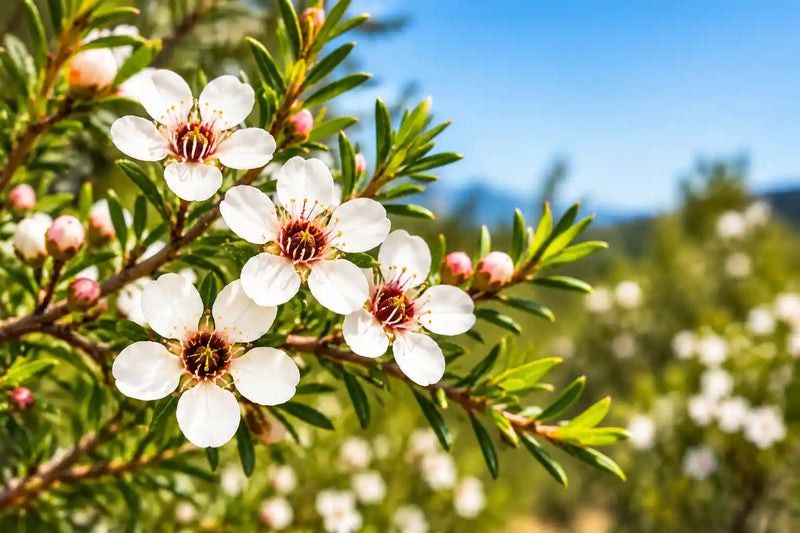
Monofloral Manuka honey is made mostly from the nectar of one plant, Manuka (Leptospermum). Multifloral honey blends nectar from several flowers. For Australian honey, the AMHA Mark of Authenticity confirms genuine Manuka through independent testing for MGO, DHA and leptosperin.
Key takeaways
- Monofloral means Manuka-led nectar.
- The AMHA Mark confirms the honey is genuine Australian Manuka.
- The MGO number shows strength, not whether a honey is monofloral.
What Is Monofloral Manuka Honey?
Monofloral Manuka honey is honey that comes predominantly from the nectar of Manuka flowers. “Mono” means one, so a single floral source leads the jar.
Monofloral honey, in general, is honey led by one kind of flower. Monofloral Manuka honey is simply that idea applied to Manuka. For Aussie shoppers, it's a handy way to know a jar's character comes from Manuka rather than a mix of wildflowers. It tends to taste fuller and earthier, and because it's led by one source, its strength is easier to read and compare. That's why you'll see an MGO figure on the front of the jar. You'll also hear it called single-source Manuka. All the names point to the same idea: a jar led by one plant, with testing that lets you see the proof.
Where does Australian Manuka honey come from?
Australian Manuka honey comes from Leptospermum plants that grow across parts of eastern Australia, including the jelly bush (Leptospermum polygalifolium) found in NSW and Queensland. The bloom is short, so beekeepers place hives close to flowering stands and harvest while the nectar is flowing. Sunhighlands hives sit with trusted NSW beekeepers, and the result is honey with real local character.
Monofloral vs Multifloral Manuka Honey: What's the Difference?
The difference is the nectar mix. Monofloral Manuka honey is led by Manuka nectar. Multifloral Manuka honey, sometimes sold as a Manuka blend, combines Manuka with nectar from other flowers. Both are real honey. Monofloral jars tend to be easier to benchmark by MGO, which makes comparing them simpler.
| Monofloral | Multifloral | |
|---|---|---|
| Nectar source | Mostly Manuka nectar | Manuka plus nectar from other flowers |
| Flavour | Fuller, earthier | Gentle, floral, an easy everyday honey |
| Batch-to-batch consistency | Easier to benchmark by MGO | Can vary with the flower mix |
| How it's verified | Independent testing (in Australia, the AMHA Mark) | Varies by brand, so check the label for testing details |
| Best for | A clear single-source Manuka with a stated MGO | A milder taste or a lighter budget |
In the shop, a monofloral jar usually leads with a stated MGO and testing details, while a multifloral jar leans on a milder, more floral taste. Both are honest ways to describe the nectar inside, so your job is simply to read them side by side and choose the style you'll enjoy most.
Is monofloral Manuka honey better?
It depends on what you want. Monofloral suits you if you'd like a clear single source Manuka with a stated MGO figure. Multifloral suits a milder taste or a lighter budget. Whichever you choose, look for independent testing behind the label. If you'd like the full side-by-side breakdown, our monofloral vs multifloral comparison goes deeper.
How Is Monofloral Manuka Honey Identified?
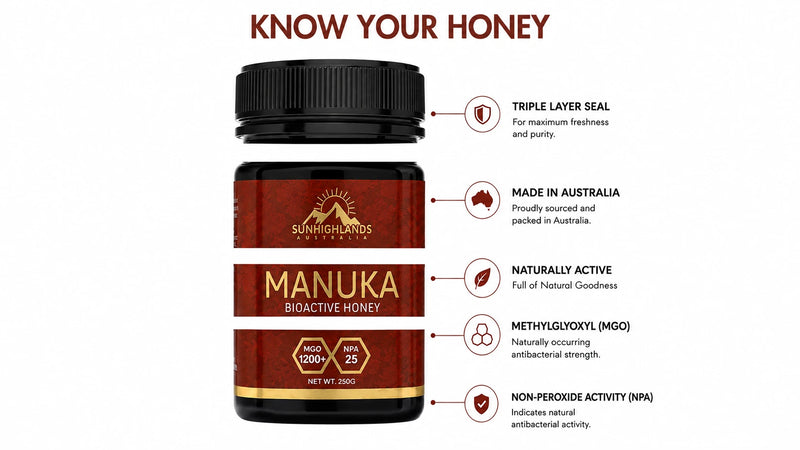
Australian Manuka honey is identified by independent laboratory testing for three markers: MGO, DHA and leptosperin. These are the markers behind the AMHA's Criteria for Defining Australian Manuka Honey. Together, they confirm the honey is genuine Manuka rather than a look-alike.
The three markers
| Marker | What it is | What it tells you |
|---|---|---|
| MGO (methylglyoxal) | The strength reading, measured in mg/kg | How strong the honey is |
| DHA (dihydroxyacetone) | A natural compound in Manuka nectar that turns into MGO as the honey matures | That the strength came naturally from Manuka nectar |
| Leptosperin | A marker found in Leptospermum honeys | Helps confirm Manuka origin |
Think of MGO as the strength reading, DHA as the family tree and leptosperin as the ID card. You want all three on the testing report. These markers work as a team. Manuka honey MGO tells you the strength, DHA shows it developed naturally from Manuka nectar, and leptosperin helps confirm the Leptospermum origin. When an independent laboratory tests all three, you get a clear, checkable picture of what's in the jar.
Does a high MGO number mean it's monofloral?
No. MGO shows strength. The Mark shows the honey is genuine. It's an easy mix-up, but they answer two different questions: “How strong is it?” and “Is it the real thing?” A good jar has a clear MGO number and independent proof of authenticity, so look for the Mark and the number together.
The AMHA Mark of Authenticity: Australia's Quality Marker
The AMHA Mark of Authenticity shows a honey is genuine Australian Manuka, produced entirely in Australia and independently tested by approved laboratories. It's the Australian Manuka Honey Association's quality marker, launched in 2019, and every licensed product can be checked on the AMHA licence register.
What does the AMHA Mark check?
The Mark confirms authenticity, with testing for MGO and DHA, and leptosperin sitting alongside them in the Criteria. The AMHA describes four steps from hive to jar: harvest, testing, certification and verification. First the honey is harvested. Next an independent laboratory tests it. Then it's certified against the Criteria, and finally it's verified so the Mark can be checked. Put simply, the Mark confirms the honey is genuine, and the MGO number shows how strong it is. For you as a shopper, that means the claim on the jar isn't just a marketing line. It's backed by laboratory results and a licence you can look up.
The AMHA tiers
The AMHA groups honey into three tiers, based on MGO. Think of the tier as one more clue to read alongside the number on the label.
| AMHA tier | Minimum MGO |
|---|---|
| AMHA Elite | MGO 500+ |
| AMHA Authentic | MGO 85+ |
| AMHA Authorised | MGO 30+ |
How to Read a Label
To tell if Manuka honey is monofloral, check five things on the label: the monofloral wording, the MGO number, the AMHA Mark, the origin, and the batch or testing details. Together they tell you what's in the jar and who stands behind it.
You've only got a minute in the aisle, so here's your quick checklist.
The monofloral wording.
“Monofloral” on the front tells you the honey is led by Manuka nectar. Look for it alongside testing, not instead of it. If a jar only says “Manuka” with no further detail, it's worth reading the rest of the label closely.
The MGO number.
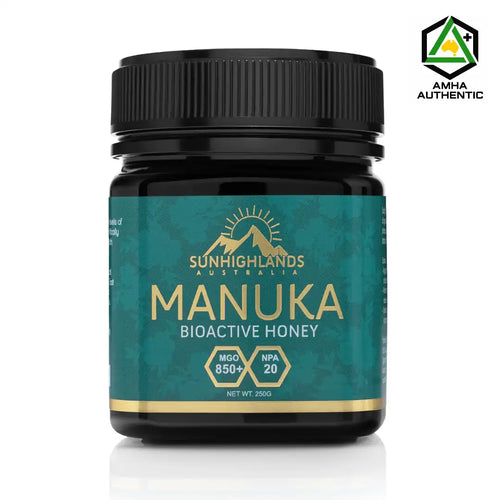
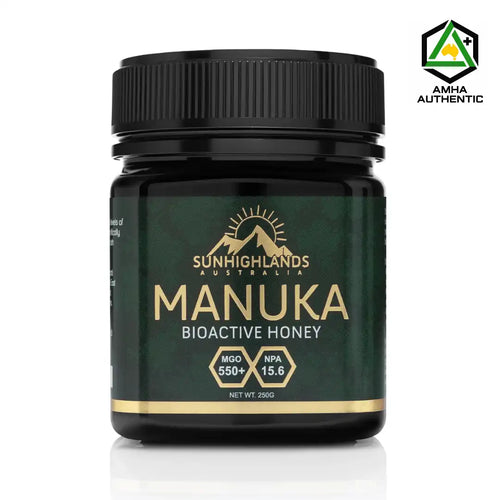
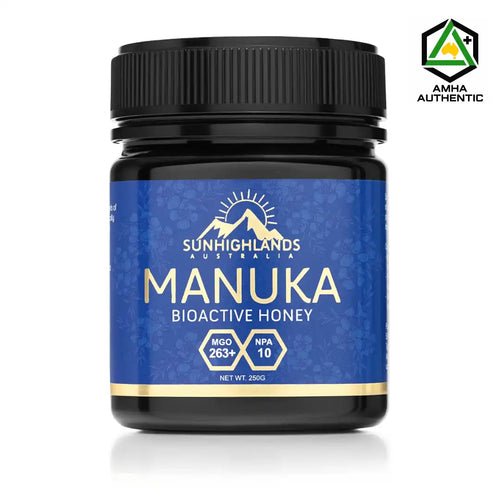
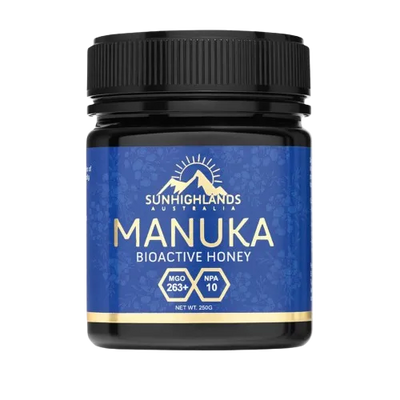
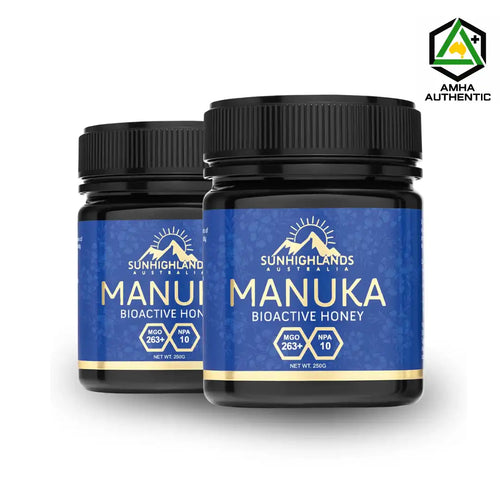
A clear figure in mg/kg, such as MGO 263+, tells you the strength. The plus sign means the figure is a minimum, and a higher number means a stronger honey. If there's no number, there's nothing to compare.
The AMHA Mark.
It shows the honey is genuine Australian Manuka that has been independently tested. On Australian jars, it's the clearest single sign of authenticity.
The origin.
Australian Manuka honey should say clearly where it was produced. Look for wording such as “Product of Australia”. A confident brand makes this easy to find.
The batch or testing details.
Batch numbers and laboratory details show a brand is happy to be checked. A batch code lets the brand trace your jar back to its test results.
That's your label check done. For the full buying walk-through, head to genuine Manuka honey buyer's guide.
Why Choose Monofloral Manuka Honey?
People choose monofloral Manuka honey for clarity: a single-source Manuka, a stated MGO number, a fuller flavour and independent testing behind it. It's a jar you can read, compare and check, which is what most Aussie shoppers want from a premium honey.
- Clear origin. The honey is led by Manuka nectar, and ours is 100% Australian-owned and harvested.
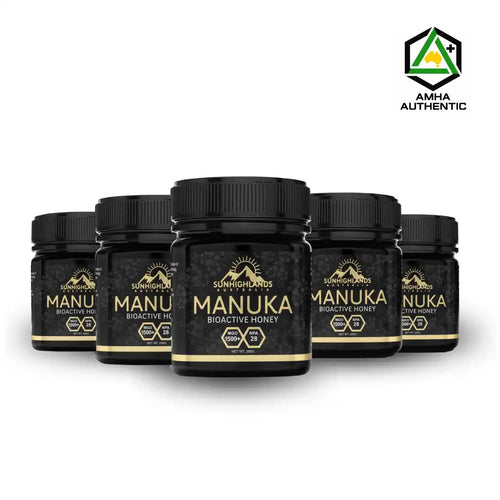
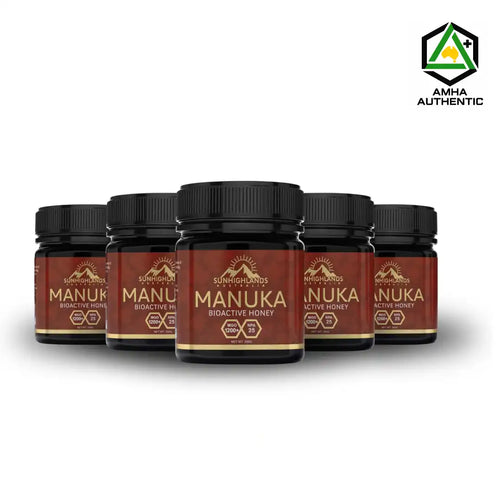
- Clear strength. MGO ratings run from 100+ to 1500+, so you can match a jar to how you'll use it.
- A fuller, earthier flavour. It's lovely on toast, in yoghurt, or stirred into a warm (not boiling) cuppa.
- Traceability you can check. The Mark, the licence register and batch details let you verify what you're buying.
Manuka honey has been traditionally used in everyday wellness routines, and it may support a balanced lifestyle. It isn't a substitute for medical advice. Manuka honey benefits guide will help you explore more.
For a lot of Aussie households, a good monofloral jar becomes the “good jar” in the pantry: the one you reach for on weekend toast or share with visitors. Knowing exactly what's in it makes that little moment of luxury feel even better. Choosing raw Manuka Honey with a clear label also means you know what you're paying for, which brings us neatly to price.
Why Does Monofloral Manuka Honey Cost More?
Monofloral Manuka Honey costs more than multifloral because Manuka blooms for a short window, hives need to sit near Leptospermum stands, and each batch is independently tested before it carries an MGO number. Higher MGO jars are rarer still.
It's a fair question to ask: why is Manuka honey expensive? Here's what goes into the jar.
- Short bloom. Manuka flowers for a brief window each season.
- Careful hive placement and harvest. Beekeepers need to be in the right spot at the right time.
- Independent laboratory testing. Each batch is tested before it carries an MGO number.
- Rarity at higher MGO. The stronger the rating, the fewer jars there are.
Think of it as paying for the work behind the label: the patience of the beekeeper, the timing of the harvest and the testing that backs up the number. Pay for what you can verify, and the AMHA Mark is the best place to start.
How to Choose the Right Manuka Honey Strength
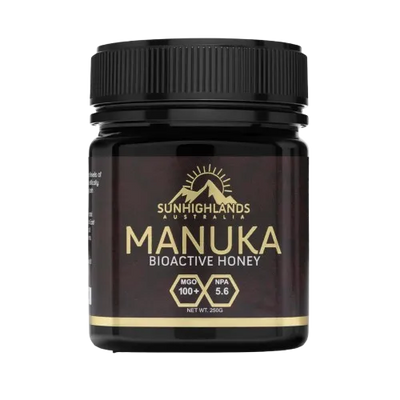
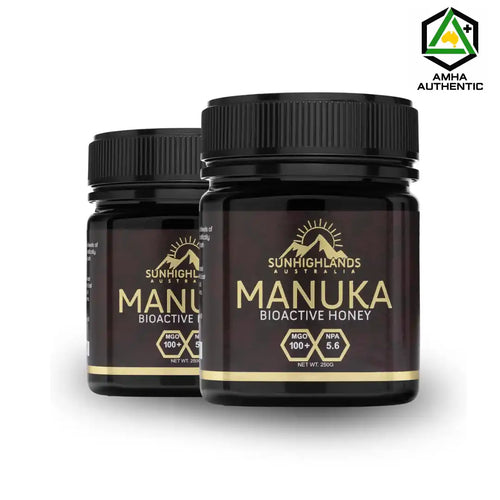
Start with the AMHA Mark, then pick an MGO that suits how you'll use it. MGO 100+ and 263+ suit everyday eating, 550+ and 850+ suit a stronger daily jar, and 1200+ to 1500+ suit dedicated Manuka fans and gifts.
| MGO | Best for | Shop |
|---|---|---|
| 100+ | Everyday eating, tea, toast, cooking after heat | MGO 100+ collection |
| 263+ | A daily spoonful, a first Manuka honey | MGO 263+ collection |
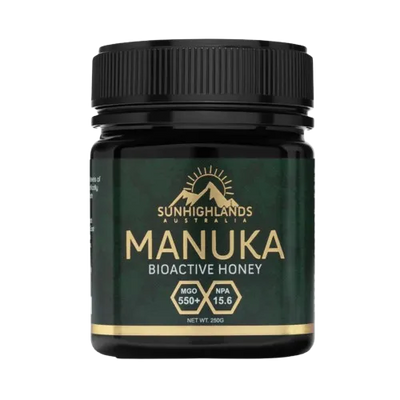
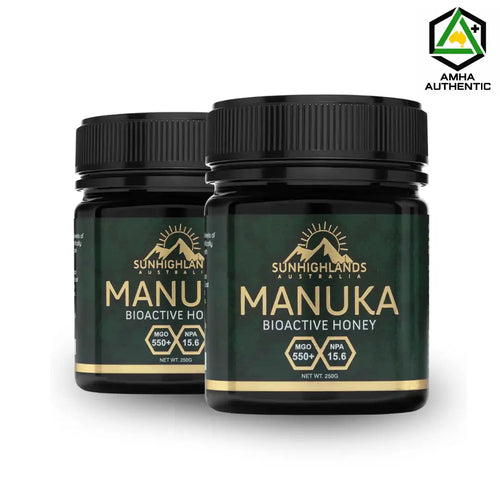
| 550+ | Regular daily use for people who want a stronger honey | MGO 550+ collection |
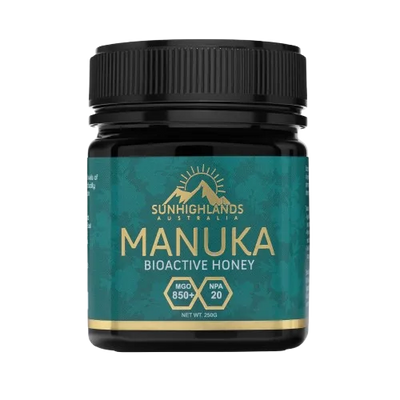
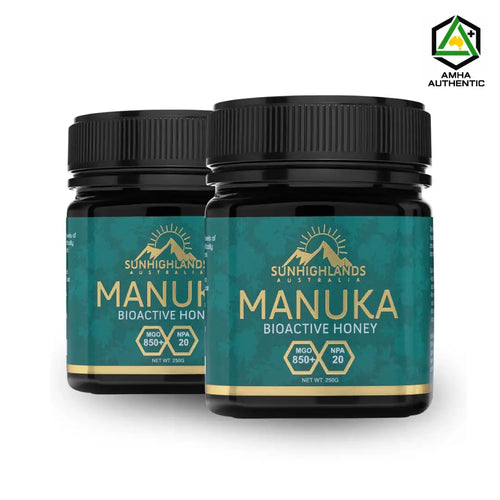
| 850+ | Premium daily honey with a bolder flavour | MGO 850+ collection |
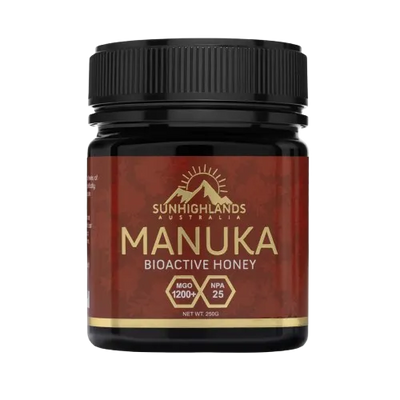
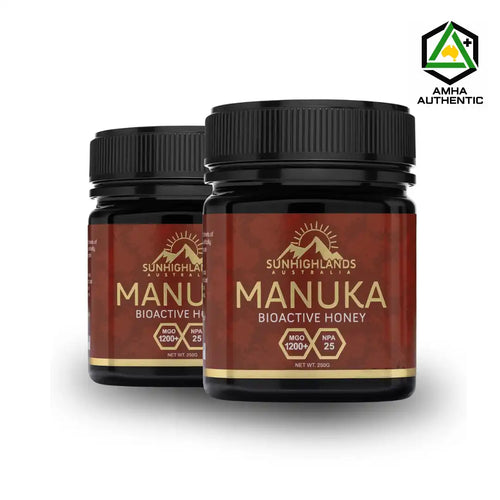
| 1200+ | High-strength honey for dedicated Manuka fans | MGO 1200+ collection |
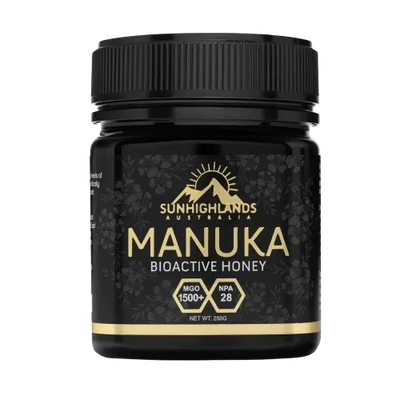
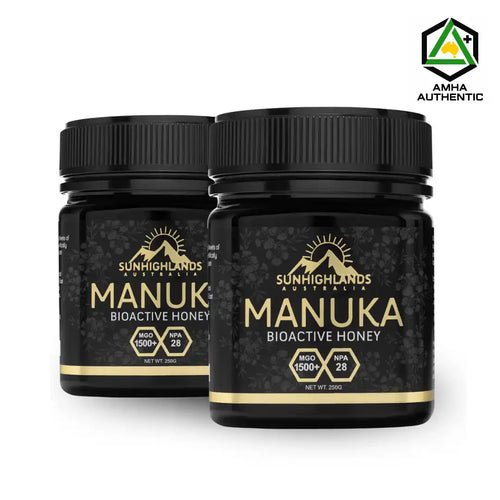
| 1500+ | Our highest MGO, a collector's and gifting choice | MGO 1500+ collection |
Before you buy, run through this quick checklist:
- The Mark is on the label.
- A clear Manuka honey MGO number is printed.
- The honey is of Australian origin.
- Independent testing is mentioned.
- Batch and label details are clear.
Not sure where to start? Many people begin with an everyday MGO and move up once they know how they like the flavour. There's no wrong starting point, as long as the jar is clearly labelled and tested. Sunhighlands MGO jars come in a handy 250 g size, which makes trying a new strength easy.
Buying in Australia? Choose an Australian brand and check it on the AMHA licence register. Australian consumer law expects label claims to be accurate, so a brand that shows its testing is a good sign.
Easy Ways to Enjoy Manuka Honey Every Day
A teaspoon straight from the jar, a drizzle over toast or porridge, a swirl through yoghurt, or a spoonful in a warm (not boiling) cuppa: it's easy to love. Raw Manuka honey is lovely with a sprinkle of cinnamon on porridge. Keep the jar in a cool, dark cupboard. If it crystallises, that's natural, and crystallisation guide shows how to soften it. Honey isn't suitable for babies under 12 months.
Frequently Asked Questions
What is monofloral Manuka honey?
Monofloral Manuka honey is honey made predominantly from the nectar of Manuka flowers. “Mono” means one, so a single floral source leads the jar. Bees roam freely, so it's never a promise of 100%. For Australian honey, independent testing and the AMHA Mark help confirm the Manuka.
What does “monofloral” mean in Manuka honey?
“Monofloral” means the honey comes mainly from one floral source, here Manuka. Under the AMHA's framework for Australian honey, that source supplies at least half the nectar. The label, the MGO number and independent testing then confirm what's in the jar.
Is all Manuka honey monofloral?
Not always. Some jars are multifloral blends that combine Manuka with other flowers. Both are real honey, but the label and testing tell you which one you're holding. Look for clear monofloral wording, an MGO number and the Mark.
Does monofloral Manuka honey mean 100% Manuka?
No. Bees roam freely, so monofloral means predominantly Manuka nectar, not 100%. Independent testing for MGO, DHA and leptosperin confirms the Manuka markers are present. That's why honest labels talk about honey being led by Manuka rather than made only from it.
How can I tell if Manuka honey is genuine?
Look for the Mark, check the brand on the AMHA licence register, and confirm a clear MGO number, independent testing and Australian origin. Together, those checks show you're holding genuine Australian Manuka.
How to tell if Manuka honey is monofloral?
Read the label in five steps: the monofloral wording, the MGO number, the Mark, Australian origin, and batch or testing details. If all five line up, you can be confident about what's in the jar. Not sure about a label? Ask the brand for its testing details.
Does a high MGO number mean it's monofloral?
No. MGO shows strength, while the AMHA Mark shows genuineness. A jar needs both a clear MGO number and independent proof of authenticity. MGO alone doesn't tell you whether a honey is monofloral, so read the number and the Mark together.
Is monofloral better than multifloral?
It depends on what you want. Monofloral suits you if you'd like a clear single-source Manuka with a stated MGO, and multifloral suits a milder taste or a lighter budget. Both can be lovely honeys.
What is the difference between Australian and New Zealand Manuka honey?
They come from different Leptospermum species and growing regions. Australian Manuka mainly comes from jelly bush (Leptospermum polygalifolium), while New Zealand Manuka is Leptospermum scoparium. Australian honey is graded by MGO and the AMHA Mark, and New Zealand honey by its own definition and UMF. Both are Manuka.
What does the AMHA Mark of Authenticity mean?
The AMHA Mark means the honey is genuine Australian Manuka, produced in Australia and independently tested for authenticity, MGO and DHA. It confirms the honey is the real thing, while the MGO number on the label shows how strong it is.
Monofloral Manuka honey is Manuka-led, the AMHA Mark confirms genuine Australian Manuka, and the MGO number shows strength. Read all three together and you'll choose with confidence. Whether you pick monofloral or multifloral, the best jar is the one that's clearly labelled, independently tested and right for how you'll enjoy it.
This article is general information only and isn't medical advice.


