Manuka Honey Guide
Benefits, Uses, MGO Ratings & Buying Tips
The Ultimate Manuka Honey Guide
Manuka honey is a rich, dark honey made by bees that forage on the flowers of Leptospermum plants, known in Australia as manuka or jelly bush. It is prized for its naturally occurring methylglyoxal (MGO), its antioxidants and its deep, earthy flavour. This guide explains what manuka honey is, what the research says about its benefits, how MGO ratings work, and how to choose real Australian manuka honey with confidence.
Manuka Honey at a Glance

The key number
Explain the MGO number and what it means for this jar.
Not suitable for
Who should avoid this product.
Typical serve
How much to take and how often.
What is it?
Short description of this honey.
Origin
Where this honey comes from.
How to check it is real
How customers can verify authenticity (lab certificate, batch number, etc).

The key number
Explain the MGO number and what it means for this jar.
Not suitable for
Who should avoid this product.
Typical serve
How much to take and how often.
What is it?
Short description of this honey.
Origin
Where this honey comes from.
How to check it is real
How customers can verify authenticity (lab certificate, batch number, etc).

The key number
Explain the MGO number and what it means for this jar.
Not suitable for
Who should avoid this product.
Typical serve
How much to take and how often.
What is it?
Short description of this honey.
Origin
Where this honey comes from.
How to check it is real
How customers can verify authenticity (lab certificate, batch number, etc).

The key number
Explain the MGO number and what it means for this jar.
Not suitable for
Who should avoid this product.
Typical serve
How much to take and how often.
What is it?
Short description of this honey.
Origin
Where this honey comes from.
How to check it is real
How customers can verify authenticity (lab certificate, batch number, etc).

The key number
Explain the MGO number and what it means for this jar.
Not suitable for
Who should avoid this product.
Typical serve
How much to take and how often.
What is it?
Short description of this honey.
Origin
Where this honey comes from.
How to check it is real
How customers can verify authenticity (lab certificate, batch number, etc).

The key number
Explain the MGO number and what it means for this jar.
Not suitable for
Who should avoid this product.
Typical serve
How much to take and how often.
What is it?
Short description of this honey.
Origin
Where this honey comes from.
How to check it is real
How customers can verify authenticity (lab certificate, batch number, etc).
Sunhighlands Range
1. What Is Manuka Honey?
Manuka Honey is produced when bees collect nectar from the flowers of manuka plants, which belong to the Leptospermum genus. The honey is thick, dark and slightly earthy, and it contains a naturally high level of methylglyoxal (MGO), the compound used to grade its strength.

Only a short flowering window each year makes manuka honey possible, and the bees must forage in the right places at the right time. That limited supply, plus laboratory testing for every batch, is a large part of why manuka honey costs more than everyday honey. It is a long way from a table honey that comes from mixed flowers and has no strength rating.
2. Australian Manuka Honey
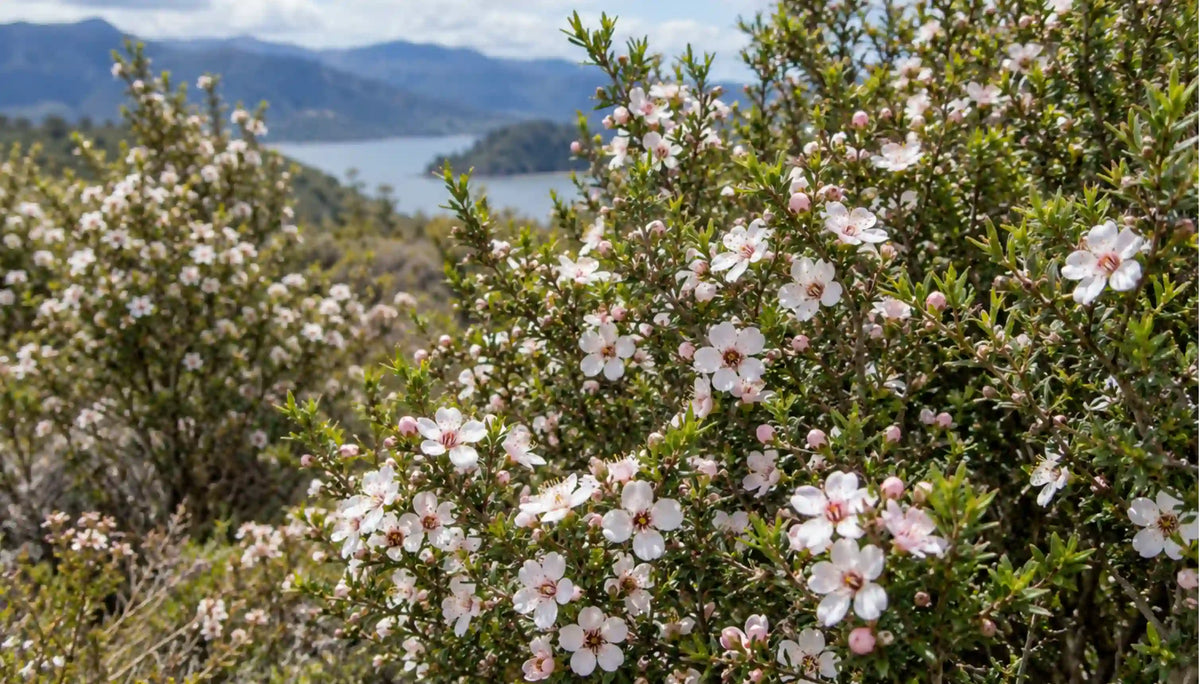
Manuka is not only a New Zealand plant. The Leptospermum genus has around eighty species, and most of them grow in Australia, where they are commonly called jelly bush or tea tree. Australian beekeepers place hives near flowering Leptospermum in coastal forests and bushland, and Australia's diversity of species is one reason very high MGO levels are possible here.
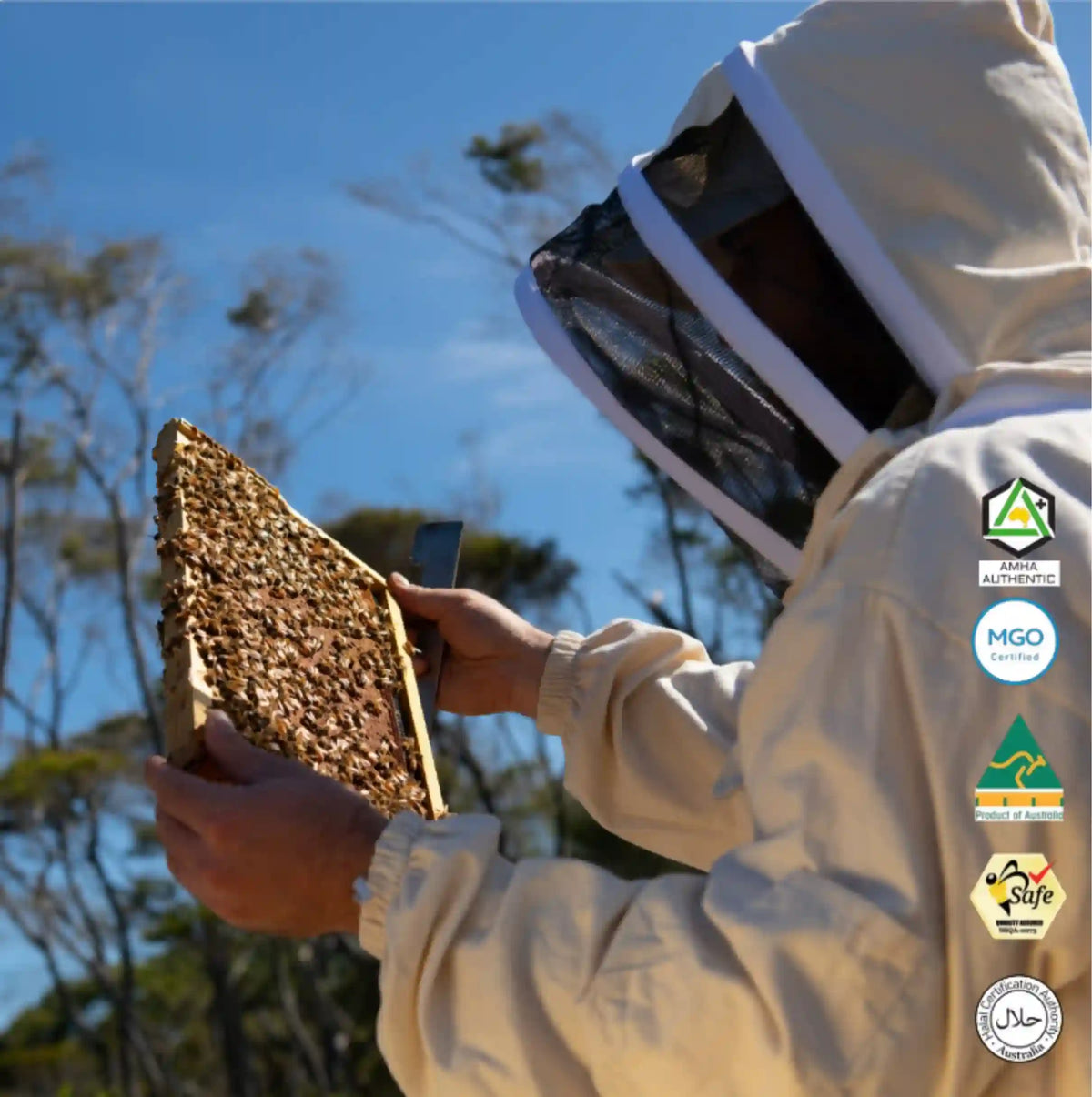
The Australian Manuka Honey Association (AMHA) was formed in 2017 to protect and promote Australian manuka. It created the Criteria for Defining Australian Manuka Honey and a Mark of Authenticity. To carry the mark, honey must be pure, natural manuka produced entirely in Australia and tested by an independent laboratory for naturally occurring methylglyoxal (MGO), dihydroxyacetone (DHA) and leptosperin.
One practical difference matters when you shop. New Zealand manuka is often labelled with UMF, a grading system run by a New Zealand association. Australian manuka is graded by MGO, which is why you will see numbers such as MGO 263+ or MGO 850+ on Sunhighlands jars. https://www.sunhighlands.com.au/collections/manuka-honey
3. The Science: MGO, DHA and Antioxidants
Methylglyoxal (MGO). MGO is the compound most closely linked to manuka honey's distinctive activity. It forms in the honey over time from dihydroxyacetone (DHA), a compound found naturally in manuka nectar. Laboratories measure it in mg/kg, which is why the number on a jar is a measurable quantity and not a marketing score.
DHA and leptosperin. DHA is the precursor to MGO. Leptosperin is a natural marker that helps confirm the honey really came from manuka flowers. Testing for all three, as the AMHA criteria require, gives a fuller picture of authenticity than testing MGO alone.
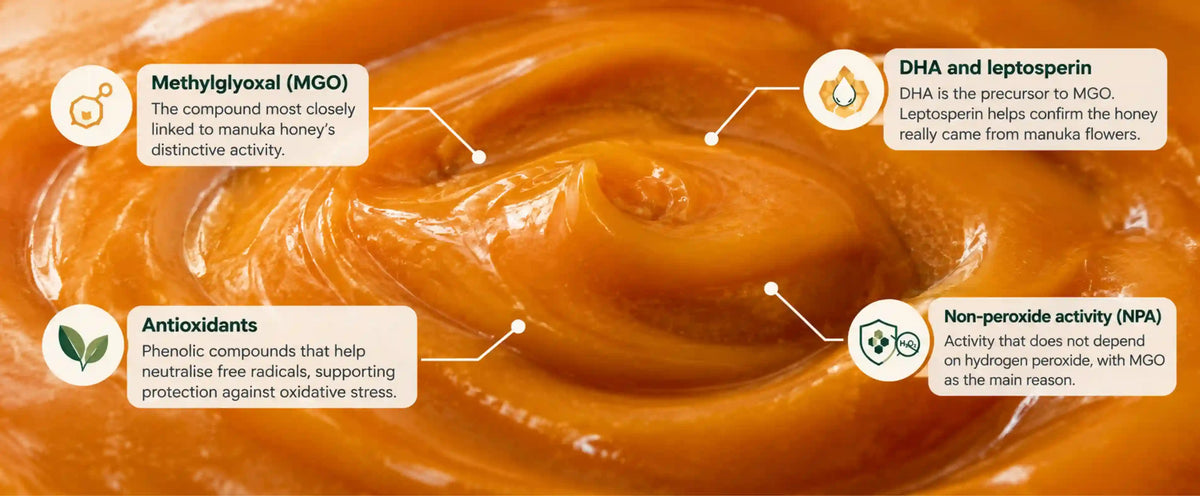
Antioxidants. Like other dark honeys, manuka honey contains phenolic compounds that act as antioxidants. Antioxidants help neutralise free radicals, which are unstable molecules linked with oxidative stress in the body.
Non-peroxide activity. Most honeys show some antibacterial activity from hydrogen peroxide. Manuka honey is known for activity that does not depend on hydrogen peroxide, often called non-peroxide activity (NPA), and MGO is the main reason.
4. Benefits of Manuka Honey
The benefits of manuka honey are an active area of research, and it helps to separate what is well supported from what is still being studied. Manuka Honey is a food not a medicine. It cannot diagnose, treat or cure any condition but act as supportive therapy.
A natural source of antioxidants. Manuka honey contains phenolic compounds and is a more nutritious sweetener choice than refined sugar, although it is still sugar and should be enjoyed in moderation.
Throat comfort. Honey has long been used in warm drinks to soothe a scratchy throat, and honey in general is widely used for cough relief in people over 12 months of age. [Link: manuka honey for sore throat blog]
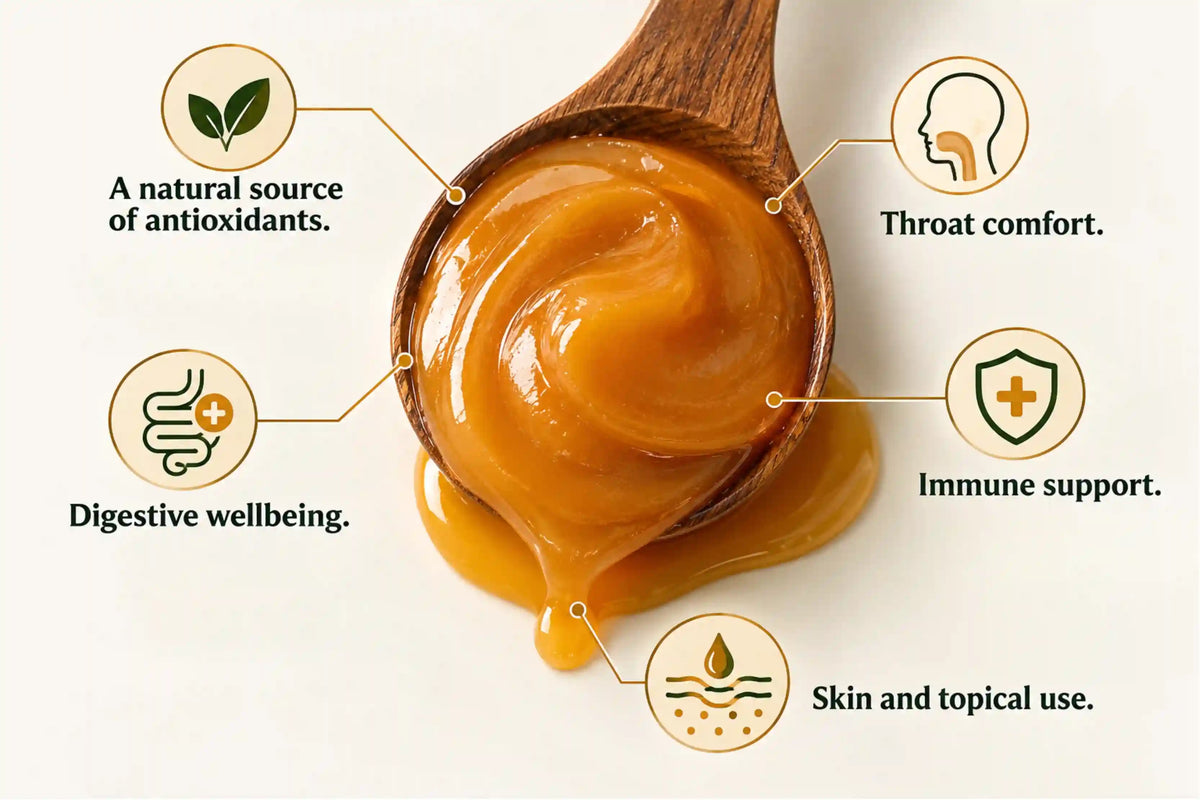
Digestive wellbeing. Honey has traditionally been used as part of a gentle daily routine. Research into manuka honey and digestion is still early, so it is best seen as part of a balanced diet.
Immune support. Manuka honey's antioxidants and bioactive compounds are often discussed in connection with general wellbeing. It is used as supportive therapy.
Skin and topical use. Manuka honey is widely used in skincare for its moisturising and soothing qualities. See the skin section below.
5. Manuka Honey for Skin
Honey is a natural humectant, which means it helps skin hold moisture. This is one reason manuka honey appears in face masks, cleansers and DIY routines.
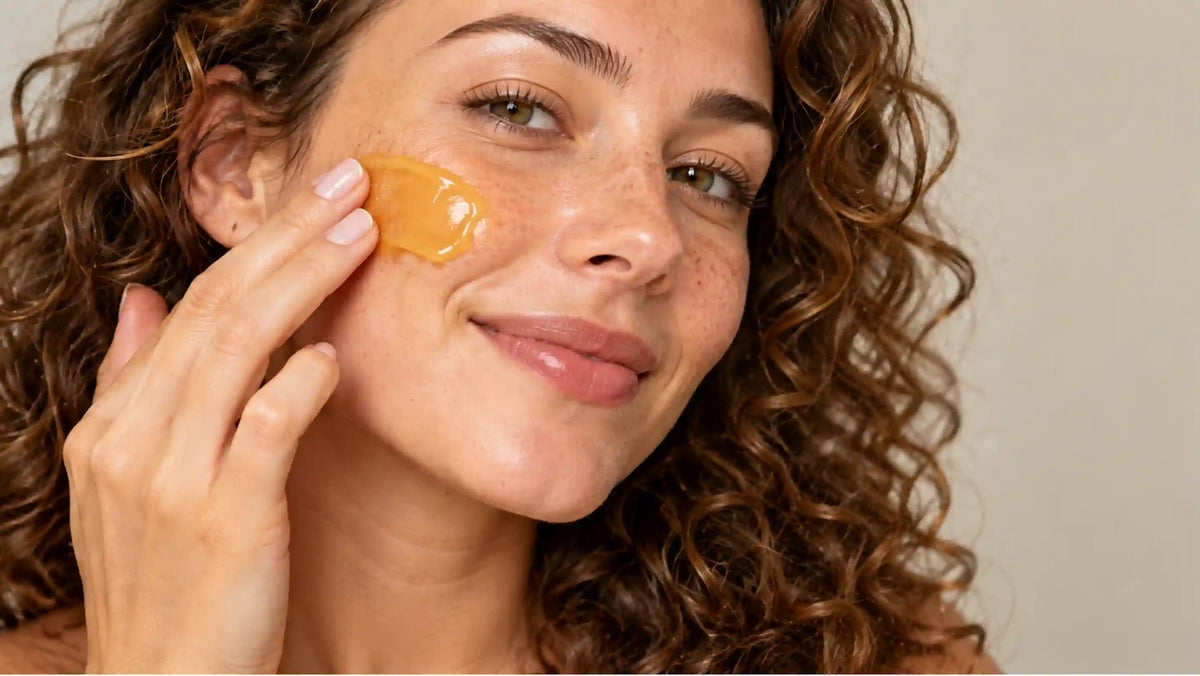
A simple way to try it is a thin layer of manuka honey on clean skin for 10 to 15 minutes, then rinse with warm water. Always patch test on a small area first and stop if you notice irritation. Do not put food-grade honey on open wounds and burns skin. Medical-grade honey products are regulated separately for wound care, and wounds should be assessed by a health professional.
6. MGO Ratings
The MGO number tells you the minimum amount of methylglyoxal in the honey. Higher numbers mean more MGO and usually a stronger, more intense flavour. Because MGO can be measured in a laboratory, it is one of the clearest ways to compare manuka honeys. UMF is a New Zealand grading system, so Australian Manuka Honey is labelled with MGO and not UMF.
7. Which MGO Strength Should You Choose?
There is no single best strength. The right choice depends on how you plan to use the honey, your taste, and your budget. Higher-MGO honey is a premium product with a stronger flavour, so many people use a smaller serve.
| MGO Rating |
Equivalent UMF |
Primary Health & Wellness Benefits | Best Suited Sunhighlands Product |
|---|---|---|---|
| MGO100+ | UMF 6+ |
Daily wellness maintenance, natural sweetener, mild immune support
|
MGO 100+ |
| MGO263+ | UMF 10+ |
Daily digestive balance, soothing tea sweetener, general skincare
|
MGO 263+ |
| MGO550+ | UMF 16+ |
Active sore throat relief, targeted gut support, DIY facial masks
|
MGO 550+ |
| MGO850+ | UMF 20+ |
Intensive gut protocols, severe sore throat, dermatitis & wound care
|
MGO 850+ |
| MGO1200+ | UMF 25+ |
High-potency therapeutic healing, chronic wound dressings
|
MGO 1200+ |
| MGO1500+ | UMF 28+ |
Maximum therapeutic bioactivity, specialised clinical use
|
MGO 1500+ |
If you are new to manuka honey, MGO 263+ is a sensible place to begin. If you want a stronger jar, move up one level at a time.
8. Raw Manuka Honey
Raw honey is honey that has not been pasteurised or heavily filtered, so it keeps more of the natural pollen, enzymes and compounds that come from the hive. Raw manuka honey is usually thick and creamy, and it can crystallise over time, which is normal.
Sunhighlands sources its Manuka Honey from North East NSW. We make sure to preserve all the goodness of our natural honey. Because the honey is unprocessed, it may retain some natural elements, such as propolis, wax and pollen. To retain live enzymes and nutrients, we also ensure that our honey is extracted at a low temperature. The properties of honey are beneficial for health and wellbeing.
9. Manuka Honey vs Regular Honey
| Feature | Manuka Honey | Regular Honey |
|---|---|---|
| Source | Leptospermum (manuka) nectar | Mixed or other flowers |
| Strength rating | Graded by MGO | Usually none |
| Testing | Independent laboratory testing | Often not tested |
| Texture | Thick and creamy | Often runny |
| Flavour | Rich, earthy, slightly mineral | Light and floral |
| Price | Higher, rises with MGO | Lower |
| Best for | Daily wellness routine, premium use | General sweetening and cooking |
Both are natural sweeteners, and both contain sugars. Manuka honey stands out for its MGO content and its testing and grading.
10. How to Choose Real Manuka Honey
Because manuka honey is valuable, imitations exist. Use this checklist.
Check the origin. The label should clearly state where the honey was produced.
Look for a clear MGO number. No rating is a red flag.
Look for the AMHA Mark of Authenticity. It shows the honey was independently tested for MGO, DHA and leptosperin.
Choose a brand that shares its testing. Honest brands explain how their honey is tested and certified.
Be careful with very low prices on high MGO. If a high rating is far cheaper than the market, ask why.
Check the texture. Real manuka honey is typically thick and creamy, not thin and pale.
11. How to Use Manuka Honey
Most people enjoy about a teaspoon a day, and a tablespoon contains roughly 15 to 17 grams of sugars, so count it as part of your daily sugar intake.
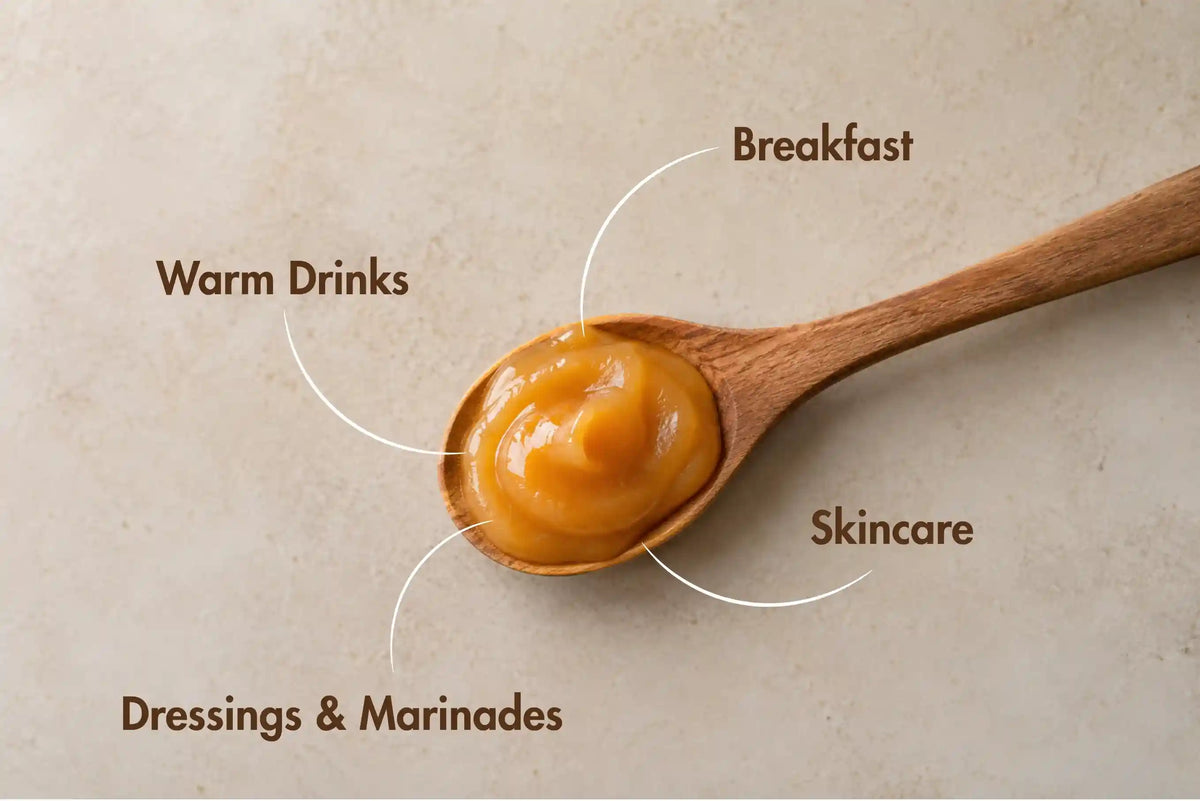
On its own: a teaspoon straight from the jar.
Warm drinks: stir into tea, lemon water or warm milk once it has cooled slightly, because very high heat can reduce some of honey's beneficial compounds.
Breakfast: drizzle over porridge, yoghurt, toast or fruit.
Dressings and marinades: whisk with olive oil, lemon and mustard.
Hot honey: manuka honey can be used for a spicy-sweet sauce. [Link: homemade hot honey sauce recipe blog]
Skincare: as a simple mask, after a patch test.
AddA simple routine is a teaspoon in the morning with warm lemon water, or a spoonful in the evening with herbal tea. your paragraph here.
12. Safety: Who Should Be Careful
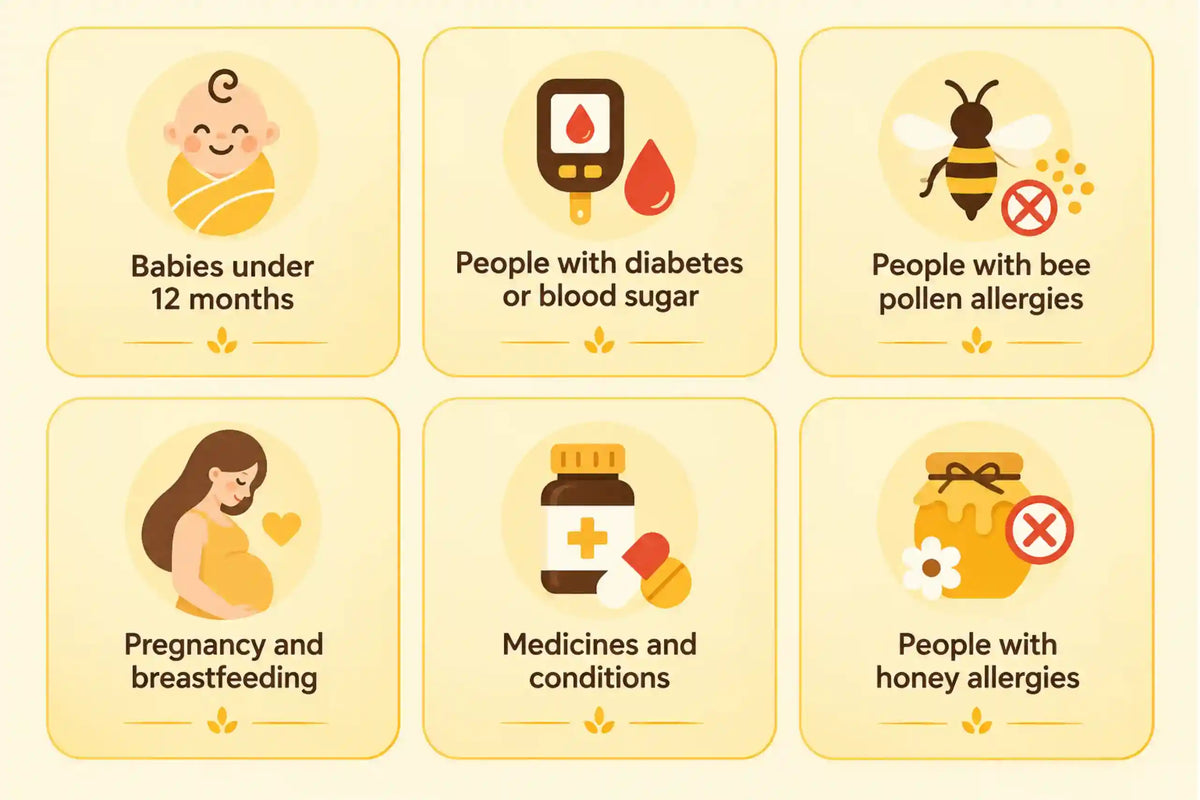
Babies under 12 months must not be given any honey, including manuka honey, because of the risk of infant botulism.
People with diabetes or blood sugar concerns should check with their doctor, because honey is a source of sugar.
People with bee, pollen or honey allergies should avoid it or get advice first.
Pregnancy and breastfeeding: honey in normal food amounts is generally fine, but ask your doctor if you have gestational diabetes or specific concerns.
Medicines and conditions: if you are unwell or take regular medication, talk to your doctor or pharmacist.
13. Storage and Crystallisation
Store manuka honey in a cool, dry place away from direct sunlight, with the lid tightly closed. It does not need refrigeration. Honey keeps well, but follow the best-before date on the jar for best flavour.
Crystallised honey is natural and safe to eat. To soften it, stand the closed jar in a bowl of warm (not boiling) water and stir. Avoid microwaving or overheating.
14. Why Choose Sunhighlands
Australian manuka honey from Australian Leptospermum, with a clear origin on every jar.
Six strengths, from MGO 100+ to MGO 1500+, so you can start gently or go premium.
Certified: AMHA certified, BSQA 0073 certified and MGO certified.r paragraph here.
Clear grading: the MGO number tells you what you are buying.